Home › Guides › 5 driveway mistakes costing UK homeowners thousands
Never done this before? Start here
An impermeable surface is a solid one that rain cannot soak through — plain concrete, tarmac or standard block paving.
A permeable surface is one that lets rain soak straight through it into the ground — gravel, permeable block paving or resin-bound stone.
Which one you pick decides whether you need planning permission (the council's formal say-so) — and that is what most of this guide is about.
1. Nearly half of UK garden space is now paved — and it's a known flood problem
The RHS (Royal Horticultural Society) published its State of Gardening report in October 2025. It used satellite photos and AI to map more than 25 million gardens. It found that 42% of garden space is paved over — rising to 55% of front gardens. Roughly 4.5 million front gardens are now completely hard surface.
Every one of those square metres sends its rain into a drain instead of into the ground. The RHS links this directly to flash floods, hotter streets and lost space for wildlife. Each paved garden seems harmless on its own. Add them all up and it's a real problem for everyone.
2. The rule most homeowners break without knowing
Here's the one that catches people out. If you lay a solid, impermeable surface bigger than five square metres, and the rain from it runs to the road, you need planning permission. That means a full application — typically around £150 and a couple of months' wait. Use a permeable surface instead — gravel, permeable block paving, porous asphalt (tarmac with tiny gaps that let water through) or resin-bound — and you need no permission at any size. The same goes if you send the run-off (the rainwater that flows off the surface) onto a lawn or border instead of the road.
Five square metres is small. It's a bit over two parking bays' worth of a single car's footprint. In practice, almost any real driveway is bigger than that.
Simplified from the Planning Portal and RHS guidance for front gardens in England. A soakaway is a stone-filled pit that lets water drain slowly into the ground. Conservation areas, listed buildings, National Parks and AONBs (Areas of Outstanding Natural Beauty) have extra rules — check with your council. Dropping a kerb (lowering it so cars can drive over) needs separate permission from the council's roads department, whatever the surface.
Here's the catch: the cheapest-looking quote — plain concrete or standard block paving running straight to the kerb — is exactly the one that breaks the planning rules. Councils rarely take action. But the problem comes up at the worst possible moment: when you sell, and the buyer's solicitor asks for paperwork you don't have.
3. The drainage rules just had their biggest upgrade in a decade
On 19 June 2025, DEFRA (the government department for the environment) published new National Standards for Sustainable Drainage Systems (SuDS). SuDS means dealing with rain where it falls — soaking it into the ground or storing it — instead of piping it all into the sewers. This was the first big update since 2015. There are seven standards. The main one is a simple order of preference for rainwater: get it into the ground or reuse it first, and send it to a sewer only as a last resort. The others cover things like catching rainfall, slowing the flow in a storm, water quality, wildlife and long-term upkeep.
Be clear about what these rules cover, because a lot of the news coverage got it wrong. The standards are non-statutory (not law — guidance only) and they apply to major developments — ten or more homes, or sites over half a hectare — not to your driveway. The part of the law that would make them compulsory in England (Schedule 3 of the Flood and Water Management Act) has not been switched on yet, though it has in Wales. But they show you exactly where the rules are heading.
4. Drought and flood now arrive in the same year
2025 proved the point better than any report. Hosepipe bans hit several English regions — Yorkshire's ran from July into December — and breaking one can mean a fine of up to £1,000. The same year also brought flash floods. Permeable surfaces help with both problems. They let rain soak into the ground instead of racing into a sewer. And they work well alongside water butts and rain gardens (planted areas built to soak up rainwater), which store water for when you're not allowed to use a hose.
5. Permeable doesn't mean ugly, gravelly or dear
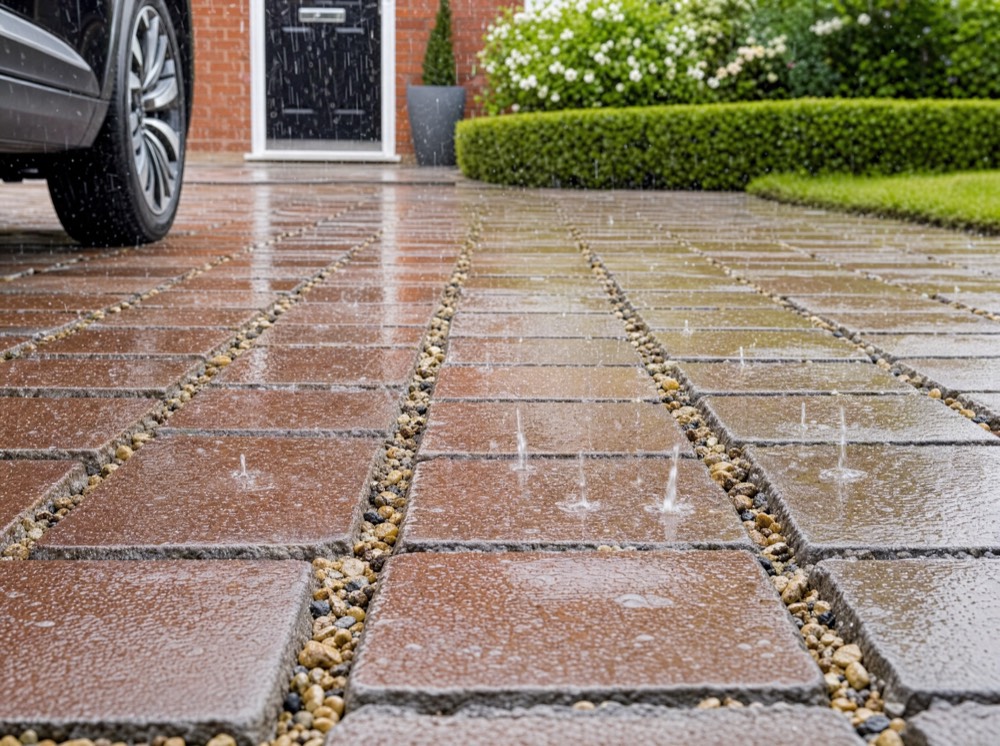
The most common myth is that "permeable" means a scruffy gravel rectangle. It doesn't. Permeable block paving looks almost exactly like the standard kind. The difference is wider gaps between the blocks, filled with clean stone, over a sub-base (the layer of packed stone underneath) that water can pass through. Resin-bound gravel looks smooth and sealed — but rain soaks straight through it.
On our own checked 2026 prices, a professionally built gravel driveway costs £60–£100/m². Resin-bound costs £60–£100/m² laid over a sound existing base (£120–£160/m² if the old drive has to be dug out first). Block paving costs £90–£110/m² fitted. You can cost each one for your own drive in our gravel, resin and block paving calculators. So the permeable options are not the dear ones. And in every case, most of the money goes on digging out the ground and the packed stone base underneath — not the surface you can see.
One naming trap worth knowing: resin-bound is stone mixed with resin like a paste and spread smooth — water soaks through it. Resin-bonded is loose stone scattered onto a layer of resin glue — water cannot get through it. Check which word is on your quote.
What we'd actually buy
Prices checked July 2026
Some links below are affiliate links — we may earn a commission, at no cost to you.


Gravel stabilisation grids
Around £10–£20/m²
The upgrade that makes gravel behave like a proper driveway. These interlocking honeycomb panels hold the stones still — so the gravel stops spreading into the road, sinking into ruts under tyres, and piling up in one corner. Rain soaks straight through, you need no planning permission at any size, and it's the cheapest genuinely good driveway surface in Britain. Lay the grids on a packed stone base over a membrane (a tough fabric sheet) — never straight onto soil.
Gravel grids on Amazon →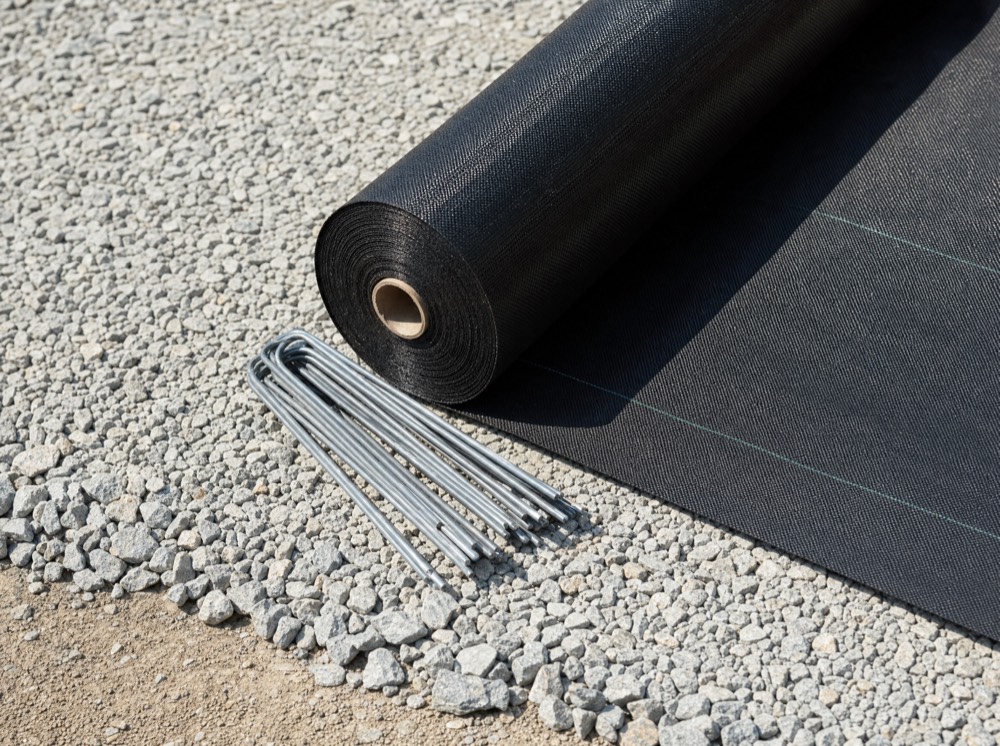

Heavy-duty woven geotextile membrane
About £0.50–£1/m²
The cheapest item in the whole job — and the one that decides how long the driveway lasts. The membrane is a tough fabric sheet that goes between the soil and the stone base. It stops the stone sinking down into the ground, and stops weeds growing up through it — the two things that turn a three-year-old drive into a rutted mess. Buy the heavy woven grade made to take cars, not the flimsy roll sold for garden borders.
Driveway membrane on Amazon →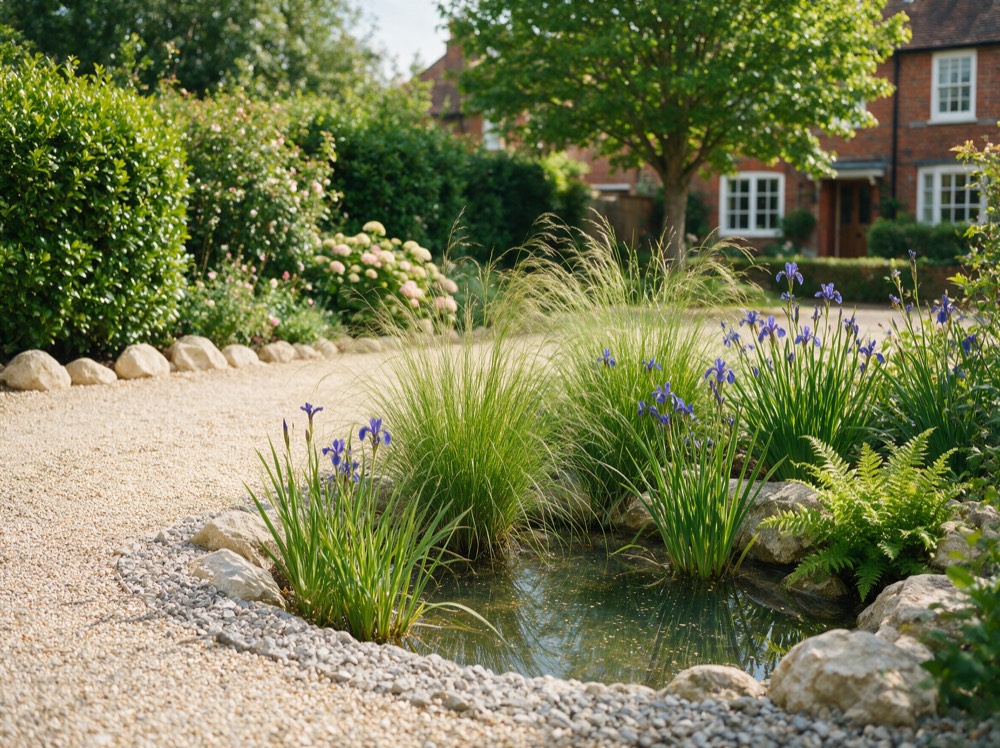

A water butt and a rain garden
Water butt from about £30
If your rainwater has to go somewhere, make it somewhere useful. A water butt on the downpipe, plus a shallow planted border to soak up the overflow, is the cheapest way to keep rain on your own land. Handily, that is also the thing that keeps a solid drive inside the rules, with no planning application needed. And when a hosepipe ban lands, you still have water for the garden.
Water butts on Amazon →
Rather not do it yourself?
A driveway lasts or fails on the packed stone base underneath it. And a dropped kerb needs permission from the council's roads department, whatever surface you choose. Post the job free and local landscapers reply with quotes, so you can compare real prices against our estimate.
Find a tradesperson for this project → driveway calculator
Get my answer — free →
What would a gravel driveway cost?
Membrane, sub-base and stone costed from one measurement.
gravel calculator
Get my answer — free →
driveway calculator
Get my answer — free →
What would a gravel driveway cost?
Membrane, sub-base and stone costed from one measurement.
gravel calculator
Get my answer — free →
Read next
Do I need planning permission for a new driveway?
Only if you lay more than 5m² of impermeable surface (one rain cannot soak through) and the rain from it runs to the road. Permeable surfaces — gravel, permeable block paving, porous asphalt, resin-bound — need no permission at any size. Neither does a solid drive that drains to a lawn, border or soakaway on your own land.
Is resin-bound the same as resin-bonded?
No, and it matters. Resin-bound is mixed like a paste and spread smooth — water soaks through it, so no planning permission is needed. Resin-bonded is loose stone scattered onto a layer of resin glue and water cannot get through it. Check which word your quote uses.
Do the new 2025 SuDS standards apply to my house?
Not directly. DEFRA's National Standards, published 19 June 2025, are not law, and they apply to major developments — ten or more homes, or sites over half a hectare. They show where the rules are heading, but they don't cover your driveway today.
What's the cheapest permeable driveway?
Gravel, especially with stabilisation grids — around £60–£100/m² professionally built on our 2026 checked prices. Most of that pays for the digging out and the stone base underneath, not the gravel itself.
Can I be made to dig up an unauthorised driveway?
In theory the council can make you undo it, though that's rare. The bigger real-world risk comes when you sell, and the buyer's solicitor asks for permission you don't have.