Home › Guides › Artificial grass: 5 things nobody tells you
Never done this before? Start here
Artificial grass is a plastic carpet made to look like a lawn. It comes on a roll and is laid on a base of packed-down stone.
Real grass is a living lawn, grown either from turf (ready-grown grass in rolls) or from seed.
People swap real grass for artificial to escape mowing and mud — this guide tells you when that swap is worth it, and when it isn't.
1. It’s much better than it used to be — but cheap and good are worlds apart
If you're picturing the flat, shiny, bright-green stuff from ten years ago, forget it. The good modern grasses mix several shades of green, add a brown layer at the base to look like dead grass (called thatch), and have a plastic backing that pushes liquid away instead of soaking it up. From the kitchen window, a well-chosen 30mm grass (that's the length of the blades) genuinely looks real.
Here's the part nobody spells out, though: “artificial grass” covers two very different products. On our checked 2026 prices, cheap 20mm grass costs £8–£14/m² (per square metre), mid-range 30mm £15–£20/m², and top-end 35–40mm £22–£30+/m². Home grasses have roughly 16,800 to 31,500 stitches per m² — the stitches are the tufts of blades, and more tufts means a fuller lawn. But thicker blades matter just as much as more of them, which is why two “30mm” grasses can feel completely different under your feet.
Almost every horror story you've read — flat in a year, shiny in sunlight, smelly after the dog, replaced within five — comes from the cheap end. And the extra money is smaller than you'd think: on a 30m² lawn, going from £10/m² grass to £22/m² costs about £360 more, on a fitted job that costs a few thousand in total. It's the one choice that matters most in the whole project — and the worst place to save money.
2. Plenty of people think it’s being banned. It isn’t — but something is changing
Let's clear this one up, because it makes some people panic-buy and others rip out a perfectly good lawn. The UK government has no plans to ban artificial grass in home gardens, and nothing being discussed would affect a lawn you lay this weekend. The confusion comes from Europe. Under an EU rule on tiny plastic particles (called REACH), the sale of polymeric infill — the small rubber crumbs (types called EPDM, TPE and SBR) scattered into artificial sports pitches — is banned from October 2031, after an eight-year wind-down. That ban is about loose rubber on sports pitches, not the grass in your garden. Existing pitches can keep going until they wear out.
So: no ban coming for your lawn. But attitudes are clearly shifting. The RHS (the Royal Horticultural Society, the UK's main gardening charity) has banned plastic grass from its Chelsea Flower Show, and rules on protecting wildlife increasingly push builders away from it on new housing estates.
3. It gets hot in direct sun — which is manageable if you plan for it
This is the one that surprises people with young children and dogs. Plastic grass gets far hotter than living grass in direct sun. Scientific studies of sports pitches have measured artificial surfaces running 25–36°C hotter than real grass under clear skies. One widely reported measurement in Australia found real grass at 33°C while artificial grass next to it hit 65.6°C, on a 35°C day.
Most of that research was done on sports pitches abroad, not UK back gardens — so treat it as a warning of what's possible, not a forecast for Tuesday in Telford. The reason is simple: real grass cools itself by releasing water from its leaves. Plastic can't do that, so the heat has nowhere to go.
The good news is you can deal with it. A quick spray with a hose cools the surface fast, and shade over the lawn in the middle of the day — from a tree or a shade sail — does most of the work. In a typical British summer it barely comes up. Just don't expect a plastic lawn to feel cool under bare feet on the few days when you'd want it to.
4. The plastic does shed — and build quality matters more than people realise
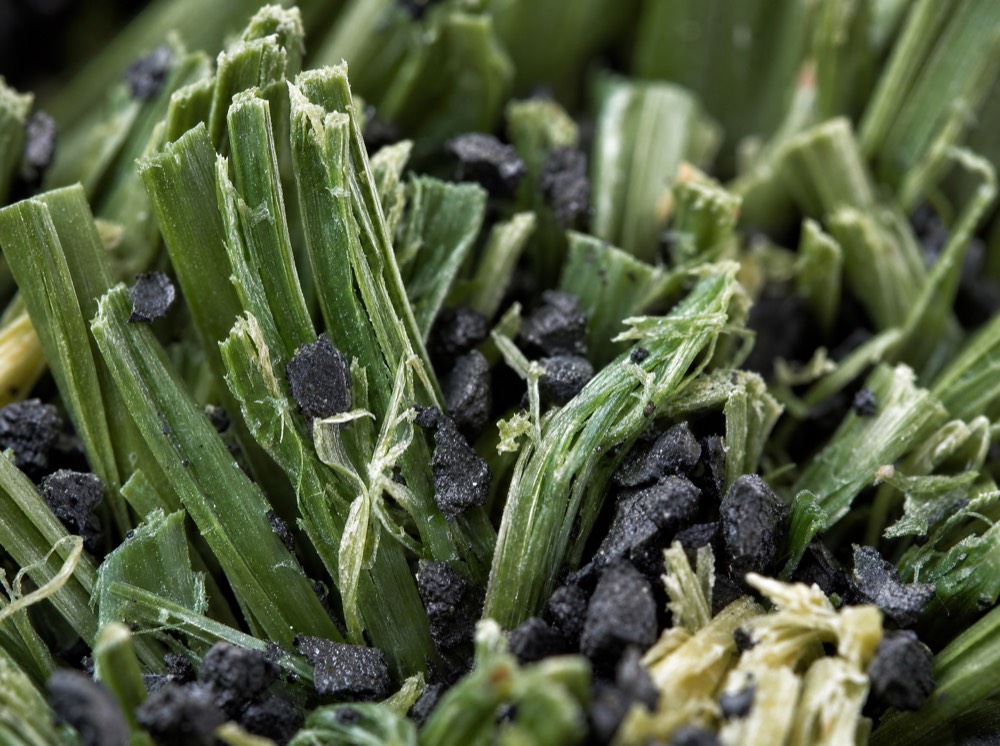
As plastic grass gets older and wears, it sheds tiny fibres. A 2023 University of Barcelona study, published in the journal Environmental Pollution, found fibres from artificial grass made up to 15% of the larger plastic particles found in coastal and river water around Catalonia in Spain.
Both of the big worries here — shedding and smell — come down to how the lawn is bought and built, not the product itself. Cheap grass with loosely held fibres sheds far more than a dense, well-made one. And a lawn laid on a proper sub-base (the layer of packed stone underneath) that lets rain drain through works fine — it's the badly built ones, where the ground is packed too solid to drain, that puddle and smell. Spend properly on the groundwork and the better grass, and most of the criticism stops applying to your garden.
To keep it in proportion, though: the RHS State of Gardening report (October 2025) mapped over 25 million gardens and found artificial lawn covers just 0.15% of domestic garden space. The argument is much louder than the problem is big.
5. It isn't the money-saver it's sold as — but it isn't a rip-off either
Here's the honest version, using our own checked 2026 prices rather than anybody's sales sheet. Over fifteen years, on a 30m² lawn, the two options end up closer than either side likes to admit:
Bars show the realistic range, not a single number. Built from our own checked 2026 prices: artificial grass £20–£35/m² DIY and £45–£70/m² fitted; real turf £4–£9/m² delivered and £10–£27/m² supplied and laid. Real-lawn upkeep assumed at £50–£120 a year (feed, seed, fuel) if you already own a mower; artificial assumed at ~£20 a year for cleaner and brushing. Prices checked July 2026.
Look at that chart properly and the answer is simple: artificial grass buys you time, not money. If you already own a mower, a real lawn usually works out cheaper over fifteen years — and if you don't mind the work, it stays cheaper. What artificial really buys is a lawn that looks the same every weekend without you lifting a finger. For a shaded, soggy, dog-wrecked patch of ground, that can be worth every penny.
Two traps to avoid either way. First, cheap artificial grass often needs replacing within 5–7 years (more on that in our cheap artificial grass guide) — which quietly doubles the fifteen-year cost. Second, because it's several plastics glued together, it can't easily be recycled when it's worn out.
Where artificial grass genuinely wins
None of the above makes artificial grass a bad buy. It just means it suits some gardens and not others. In the gardens below it is easily the best answer, and if yours is one of them you should stop worrying and get on with it:
- Deep shade. Under a big tree or between two-storey walls, real grass will never grow thick, no matter how much seed you throw at it. Grass needs sunlight, and there isn't enough. This is artificial's strongest case by a mile.
- Dogs that have already destroyed one lawn. A dense, properly chosen pet grass ends the mud, the holes and the brown patches in a single weekend.
- Tiny courtyards and balconies. Nobody wants to store a mower for four square metres — see our small-garden guide.
- Anyone who physically can't look after a lawn. Mowing is a real barrier for plenty of people, and a lawn that stays green without it is worth real money.
- Gardens that turn to a mud bath every winter. Fix the drainage first — but once that's done, artificial stays usable through months when real grass can't be walked on at all.
What those all have in common: the real lawn has already lost. That's the honest test. If your lawn is just tired rather than beaten, bringing it back to life is usually quicker and cheaper than replacing it.
Read next
What we'd actually do
Prices checked July 2026
Some links below are affiliate links — we may earn a commission, at no cost to you.

Fix the real lawn you already have
Around £30–£60 for a 30m² lawn
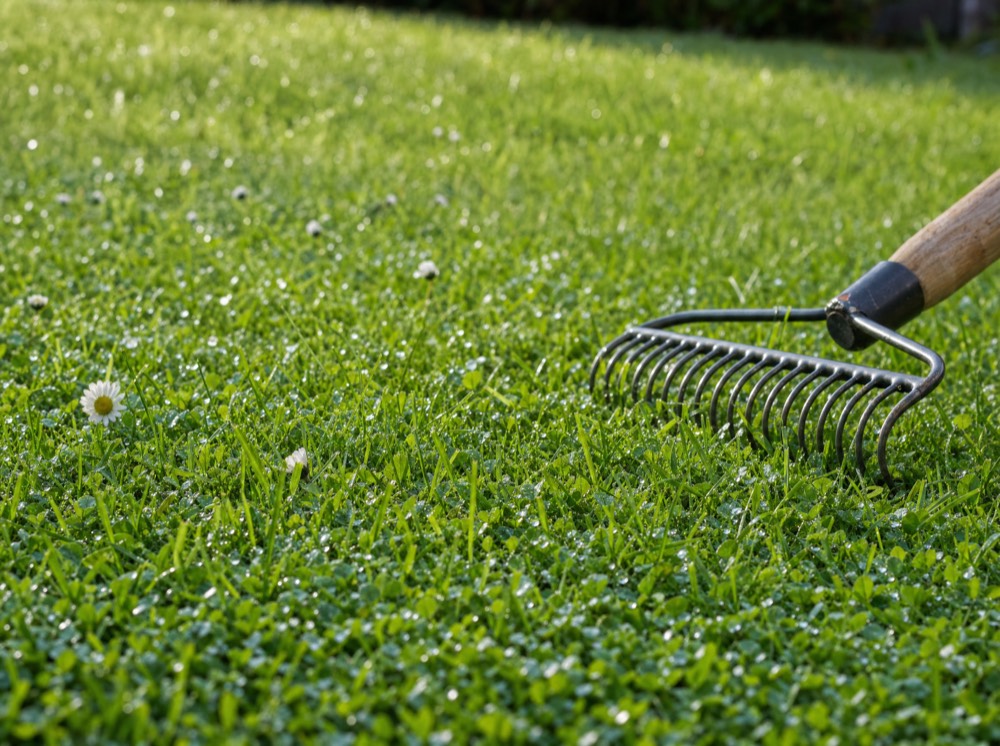
Before you spend thousands replacing grass with plastic, spend forty quid finding out whether your lawn can be saved. Most “hopeless” UK lawns aren't dead — they're squashed solid, short of light and short of food. Rake out the dead layer (called scarifying), spike holes in the ground so air and water get to the roots, and give it an autumn feed, and it can look new again in one season. This is the best-value tip in this entire article, and the cheapest.
Lawn feed & scarifying kit on Amazon →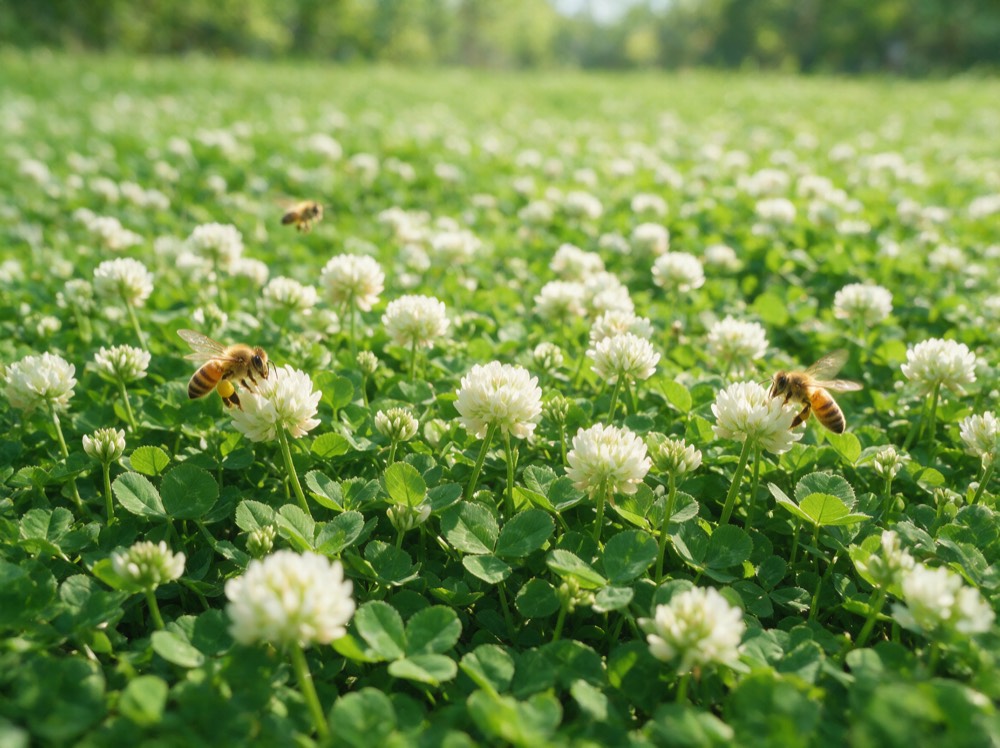
Go clover instead of grass
Seed from about £15–£30 for 30m²
The genuinely low-effort answer nobody mentions: a lawn grown from micro-clover, or clover mixed with fescue (a fine, hard-wearing grass). Clover stays green in dry spells, makes its own plant food from the air, needs far less mowing, and is alive with bees. It won't look like a bowling green and it won't survive a football goalmouth — but for a garden you want to look at rather than play on, it does what people buy plastic hoping for.
Clover lawn seed on Amazon →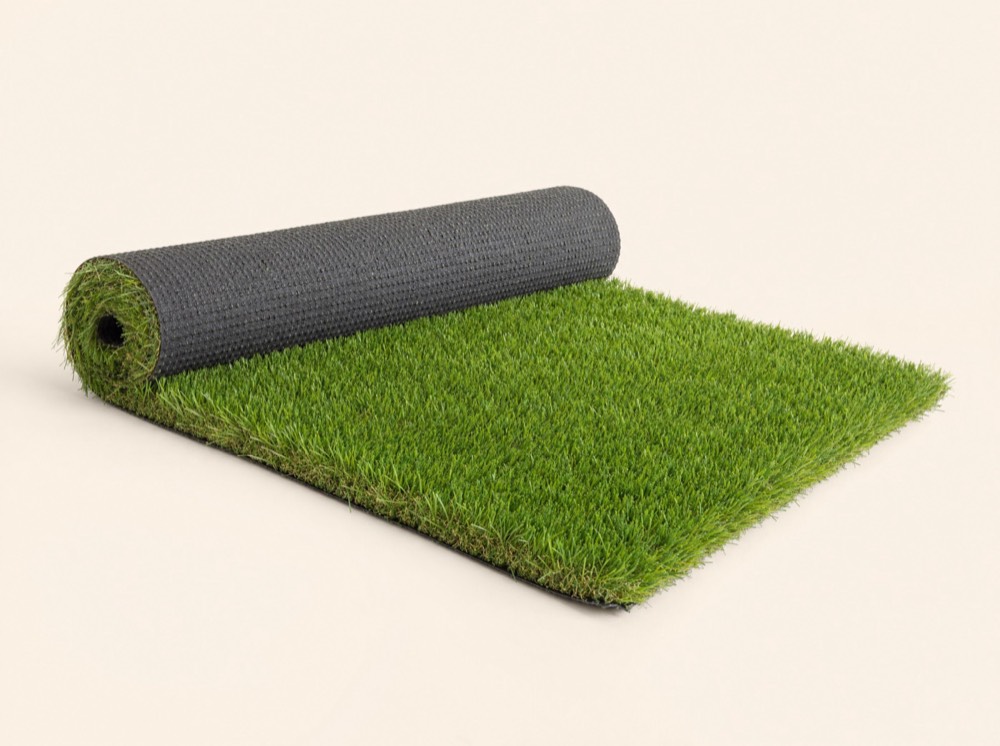

Pet Luxury 38mm — Artificial Grass Direct
£20.69/m² (reg £22.99), 2m/4m/5m widths, free sample first
If your garden is one of the cases above, this is the one we'd buy. It has dense 38mm blades on a 100% polyurethane backing — a waterproof plastic layer underneath that pushes dog urine away instead of soaking it up. That backing is what keeps a dog lawn smelling fine into year two. Specialist sellers like this publish full product details and post free samples; listings on big marketplace sites do neither, and getting a whole roll wrong is a £500 mistake. Order the sample, check it in your actual garden, then buy. More detail in our pet grass guide.
See Pet Luxury 38mm at AGD →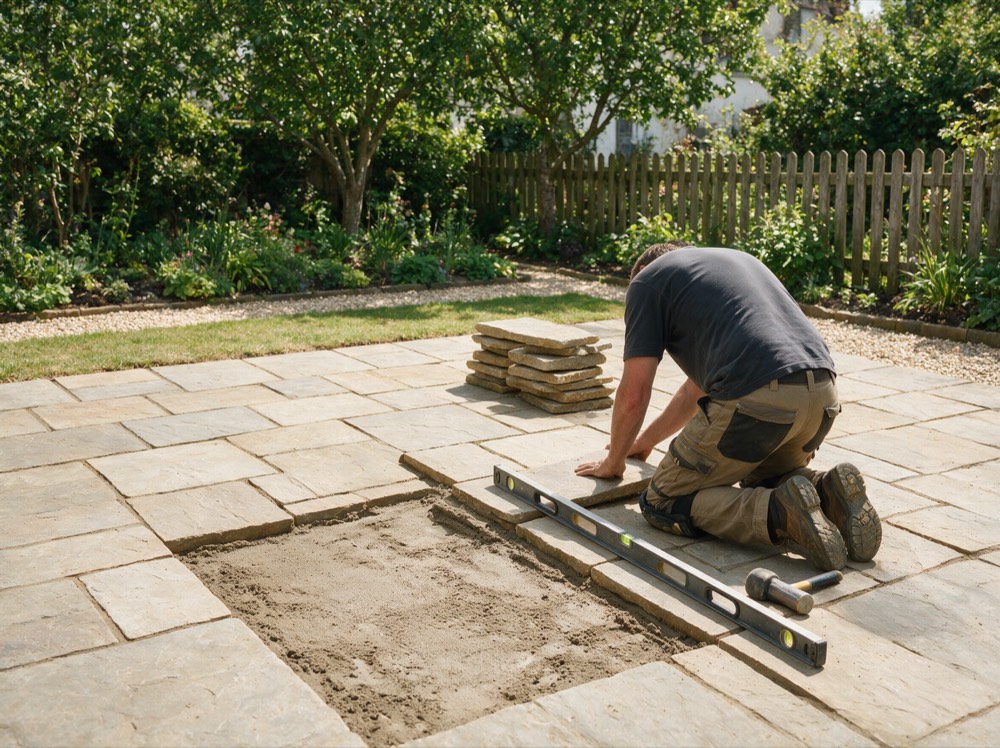
Rather not do it yourself?
Whichever way you go, the groundwork is the real job — digging out the old surface, levelling the ground and packing it down firm is 80% of the effort, and it decides whether the lawn lasts. Post the job free and local landscapers reply with quotes, so you can compare real prices against our estimate.
Find a tradesperson for this project → grass calculator
Get my answer — free →
And how much would real turf cost?
Rolls to order, delivered prices, and what laying costs — so you can compare the two properly.
turf calculator
Get my answer — free →
grass calculator
Get my answer — free →
And how much would real turf cost?
Rolls to order, delivered prices, and what laying costs — so you can compare the two properly.
turf calculator
Get my answer — free →
Is artificial grass being banned in the UK?
No. The UK government has no plans to ban artificial grass in gardens, and nothing being discussed would affect a lawn you lay today. The 2031 date people mention is an EU rule about polymeric infill — the loose rubber crumb used in sports pitches — not about garden lawns.
Does artificial grass get too hot for dogs?
It can. Studies of sports pitches have measured artificial grass running 25–36°C hotter than real grass in direct sun. On a hot afternoon, touch it with the back of your hand before letting a dog or a barefoot child on it, and spray it with a hose to cool it down.
Is artificial grass cheaper than a real lawn?
Over fifteen years, usually not — the costs end up close, and a real lawn is often cheaper if you already own a mower. What artificial buys you is time and a lawn that always looks the same, not money.
Does artificial grass devalue a house?
Nobody has reliable numbers on this, but opinion has shifted: support for a ban rose from 24% to 36% in a single year. So some buyers won't like it, but there's no proof it knocks money off — treat it as a matter of taste, not a guaranteed loss.
What's the best low-maintenance alternative to artificial grass?
For a garden you mostly look at: a clover lawn, or clover mixed with fescue (a fine grass). For walking and entertaining: permeable paving (paving that lets rain soak through), porcelain slabs, or resin-bound gravel (small stones set in a clear resin). All of these let water drain away — unlike an artificial lawn laid on ground packed too hard to drain.