
Blocks are the cheap part — £27 a square metre buys decent ones. The £90-a-metre fitted price is mostly groundwork, and it's the groundwork that decides whether your drive is flat in ten years. Price the whole build honestly here.
Quick answer: A block-paved driveway costs £90–£110 per m² fitted in 2026 — about £2,400 for a 20m² single drive and £5,000–£5,500 for a 50m² double. The blocks themselves are only ~£27/m². Most of the money goes on digging out the ground and building the sub-base (the layer of packed stone underneath). If your blocks have sunk, they can be lifted and laid again for £20–£75 per m² — the same blocks are reused.
Prices checked July 2026 · how we check them · how we work it out
Not sure which? If the surface has sunk, rocks or puddles but the blocks themselves look good, it's a re-lay — the base failed, not the blocks. Stained, crumbling or just wrong? New build.
Rough size is fine — pace it out: one stride ≈ 0.9 m.
No measurements yet? Tap a typical size above for an instant estimate, or see the worked examples.
Some links are affiliate links — we may earn a commission, at no cost to you.
Block count includes ~5% for cuts. Sub-base figured at the 150mm driveway spec — 100mm is the bare minimum on firm ground.
Sense-check it: compare these figures with real quotes from local landscapers — free, no obligation. Already got a quote? We’ll read it against these same price bands — also free.
Prices checked July 2026 · how we check them · how we work it out
These figures are planning estimates for a standard flexible build-up (100–150mm compacted MOT Type 1, 25–40mm screeded sharp sand, 50mm blocks, kiln-dried sand joints, concrete-haunched edges) on reasonable ground. Poor ground, complex patterns, steps and drainage runs all add. Herringbone and multi-size patterns need more cuts — order 10% spare rather than 5%.
Re-lay before you replace. If the blocks are sound and it's the surface that's failed, lifting and re-laying the same blocks on a corrected base costs £20–£75 per m² — against £90–£110 for new. The blocks are the one part of a drive you can recycle in place.
Budget blocks, premium pattern. A herringbone or bordered layout in £27/m² blocks beats a plain stretcher bond in £45/m² blocks on kerb appeal — and the pattern costs labour, not materials. Spend on the design, not the catalogue page.
Do your own demolition. Breaking out an old surface and filling the skip is unskilled work that prices at £40–£110 per m² on quotes (average £75, per the 2026 trade guides). A sledgehammer weekend and a £150–£320 skip is real money back.
Keep a part-pack of spares. Oil stain, cracked block, utility trench next year — single blocks swap out invisibly, but only if they're from your original batch. Colours drift between production runs; a £30 part-pack in the shed is cheap insurance.
Book the quiet season. Driveway crews price keener from November to February. Same drive, same spec — a gap in the diary is your discount.
Three material decisions — the blocks you see, the base you never see again, and the sand that holds it all. Where the budget option is a false economy, we say so.
Some links below are affiliate links — we may earn a commission, at no cost to you.
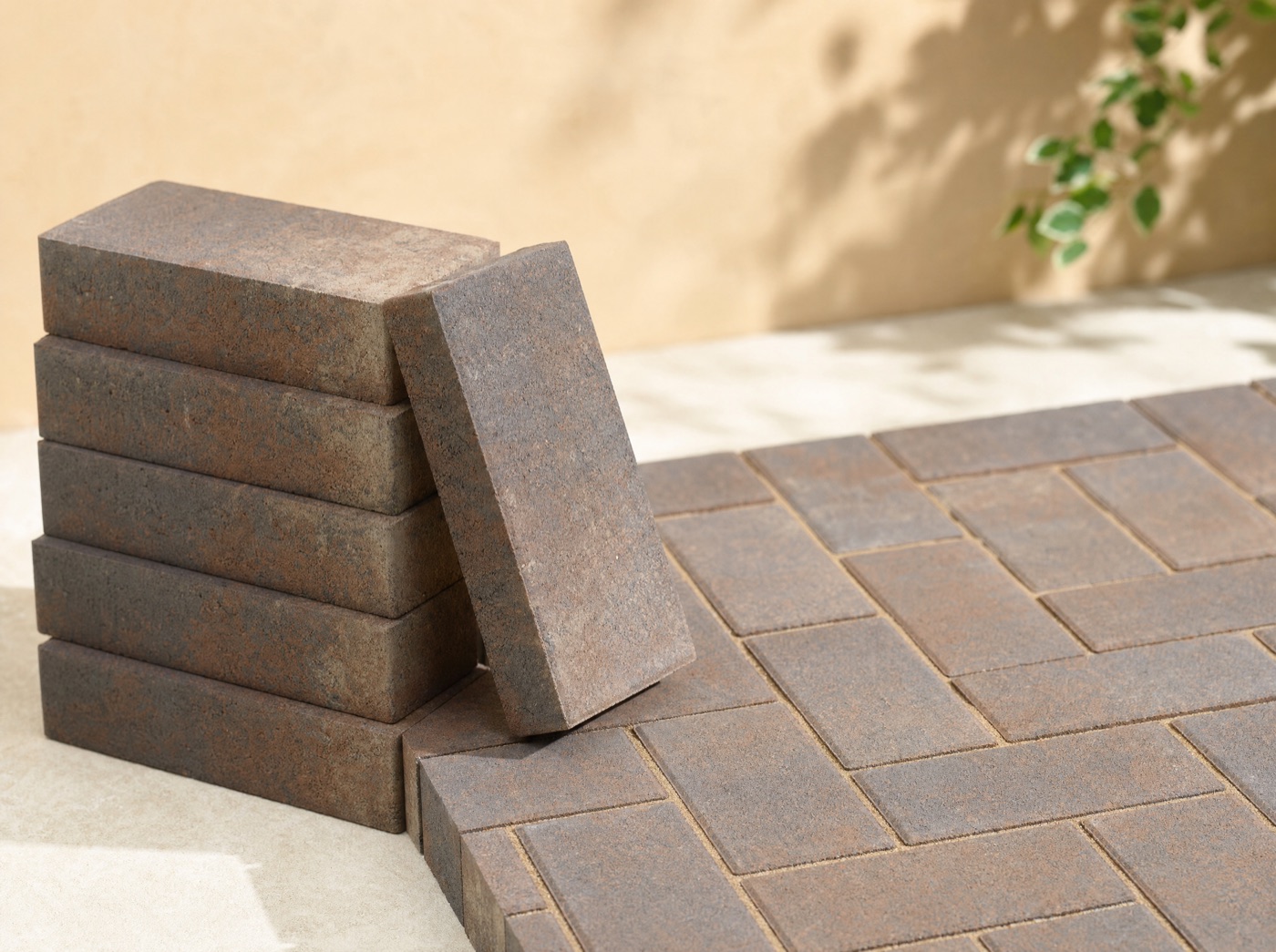

£26.50–£27.50/m² (B&Q £0.53/block, Wickes £0.55)
The standard driveway block: 50 to the square metre, rated for cars, and the big-brand budget ranges (Marshalls Driveline, Bradstone) are what most installers quote anyway. Brindle hides tyre marks and oil better than plain grey. The honest truth: laid well, budget blocks in a proper pattern look 90% as good as premium — the base and the edges make the drive, not the block.
Marshalls Driveline Brindle at Wickes →The blocks: Budget 50mm driveway blocks are a shed commodity — £26.50–£27.50/m² at B&Q and Wickes, sold by the ~9m² pack. Premium tumbled and clay pavers come from paving specialists by kerbside pallet. Order 5–10% extra for cuts and keep the spares for future repairs — colours vary between batches.
The heavy bags: Sub-base and sharp sand follow the same rules as every drive: 850kg bulk bags craned to the kerb (Wickes £75, 2 for £135), and past ~45m² a merchant's loose load beats bags. One bag of MOT Type 1 does only ~2.5m² at the 150mm driveway depth.
Tempted to one-click it all?: Fine for the light kit — mallet, string line, screed rails, knee pads. Wrong for blocks and aggregates: marketplace couriers and pallet fees erase any saving, and you can't check the batch colour before it lands.
Most drives
 Kerb appeal budget
 Skipping planning
Non-negotiable
The right sand, twice
Two hires
Skipping planning
Non-negotiable
The right sand, twice
Two hires
Prices checked July 2026 · how we check them · how we work it out
Some links are affiliate links — we may earn a commission, at no cost to you. Retailers named because we checked their prices in July 2026, not because they paid to be here.
Pick your stage — each opens Amazon.
Affiliate links — we may earn a commission, at no cost to you.
Day 1 — the dig: Excavation to 250–300mm below finished level, falls set with string lines, spoil away. A 30m² drive produces roughly 9m³ of spoil — several skips' worth. The noisy, expensive-looking day.
Day 2 — the base: Edge courses bedded on concrete and haunched. MOT Type 1 in two 75mm layers, each compacted 6–7 passes with the wacker plate. This is the moment to look: a proper base looks like a car park, not a rockery.
Day 3–4 — screed and lay: Sharp sand screeded to 25–40mm between rails, then blocks laid from one corner, 3–5mm proud, pattern building fast across the field. Cuts along the edges come last.
Final day — joints: Kiln-dried sand brushed into every joint, the whole surface vibrated with the plate, then topped up again until the joints are full. Skipping the second pass is why new drives rattle.
Aftercare: Re-sand the joints after every pressure wash and expect a top-up every few years — empty joints are how weeds move in and blocks start rocking. Sealing is optional: it locks the sand and resists oil, but commits you to redoing it every 3–5 years.
A proper written quote itemises:
Questions that sort pros from cowboys:
Walk away if:
Booking: A 50m² double drive is a 4–6 day job for a two-person team (block specialists run £200–£250 a day each). Established installers book weeks ahead — 'we can start tomorrow' is its own warning sign, especially at the front door.
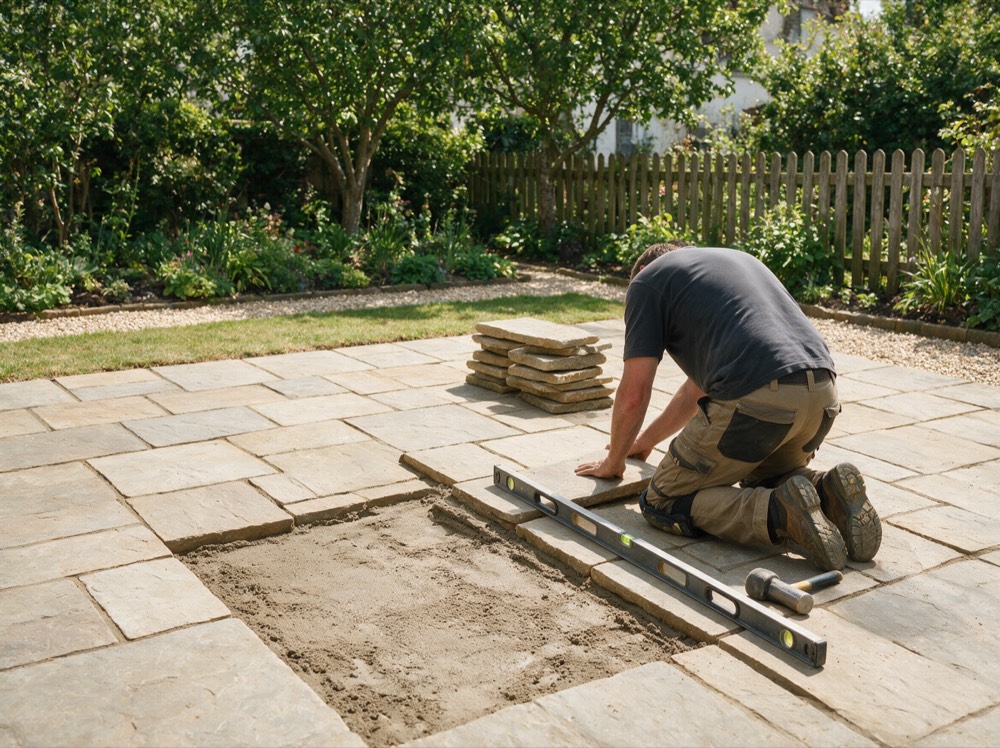
Our figure is researched, but it is not your garden. Post the job free and local landscapers reply with real prices — the honest way to check the estimate above before you commit.
Compare with real quotes →Free to use. If you get quotes through this link we may earn a commission, at no cost to you.
A new block-paved drive is a drive made of small concrete or clay bricks (blocks), laid on a bed of sand over deep layers of packed stone.
A re-lay is lifting the blocks you already have, fixing the ground underneath, and laying the same blocks back down.
Either way, it's the hidden layers of packed stone and sand — not the blocks — that keep a drive flat for years.
Standard 200×100mm blocks lay 50 to the square metre. We add about 5% extra for cut blocks — make it 10% yourself if you're laying herringbone (the zig-zag pattern, which needs more cuts at the edges). The sub-base (the layer of packed stone under everything) is worked out at the 150mm driveway depth. One 850kg bag of MOT Type 1 (crushed stone that packs down hard — the base under almost every drive) covers only about 2.5m² at that depth. That's why the bag count looks high — and why cheap quotes quietly make this layer thinner.
The blocks sit on a bed of washed sharp sand (a coarse, gritty sand) about 40mm deep — an 800kg bag does about 13m². The gaps between the blocks are filled with kiln-dried sand (a very fine, bone-dry sand that pours into narrow joints), shaken in with a vibrating plate until every gap is full. One large bag does roughly 4m².
Materials price band: budget 50mm blocks (£26.50–£27.50/m² at the big DIY stores) up to premium tumbled blocks (£43–£45/m² — 'tumbled' means machine-worn so they look aged from day one). On top of that come the stone base, both sands, concrete for the edges and a membrane (a fabric sheet under the stone). Clay pavers (£87–£94/m² supply) cost more than the band — treat them as a separate tier. Fitted prices follow the 2026 trade guides: £90–£110/m² is typical.
| Driveway | DIY materials | Fitted |
|---|---|---|
| Single — 15 m² (5 × 3m) | £950–£1,350 | £1,350–£1,650 |
| Standard — 30 m² (6 × 5m) | £1,900–£2,700 | £2,700–£3,300 |
| Double — 50 m² (10 × 5m) | £3,100–£4,500 | £4,500–£5,500 |
Prices checked July 2026. Fitted prices follow the 2026 trade guides (£90–£110/m² typical; installers charge a minimum of £1,100–£1,600 for small jobs). DIY materials use bulk-bag prices from the big DIY stores — on bigger jobs, a loose load from a builders' merchant works out cheaper still.
• Groundwork, groundwork, groundwork — digging out the ground and carting the soil away costs about £28/m² on its own. 'Groundworks' can swing £20–£100/m² between quotes, depending on what's under your drive now.
• Block choice — the blocks alone run from £26.50 to £94 per m². That's a 3.5× swing on the layer you can see, but the labour barely changes.
• Pattern — herringbone (zig-zag) and mixed-size layouts need more cut blocks and take longer to lay. Budget the extra blocks and a day more labour.
• What's there now — ripping out an old surface adds £40–£110/m². Doing that demolition yourself is the biggest single DIY saving.
• Drainage — a solid (impermeable) drive over 5m² needs somewhere legal for the rainwater to go. A soakaway (a buried pit of stone that lets water soak into the ground) or a drainage channel adds hundreds of pounds. Permeable blocks — blocks designed to let water drain through the joints — avoid the problem by design.
Fitted, budget on £90–£110 per m² — the 2026 trade guides average about £100. In real totals: a 20m² single drive is around £2,400, and a 50m² double is £5,000–£5,500. Premium tumbled blocks, clay pavers or fancy patterns push the price to £120+ per m². Small drives don't get cheap either — installers charge a minimum of roughly £1,100–£1,600 however small the area, because setting up the job costs them the same.
Standard 200×100mm blocks lay 50 to the square metre — a typical DIY-store pack of 488 covers about 9.7m². Order 5% extra for cut blocks on simple layouts, or 10% for herringbone (zig-zag) and mixed-size patterns. Keep the leftovers: a single block can be swapped out later without anyone noticing — but only if it comes from the same batch, because the colour varies between batches.
It's almost never the blocks — it's the ground underneath. Either the dig wasn't deep enough, the sub-base (the layer of packed stone underneath) was too thin or not packed down hard enough, or water has washed the fine material out from under it. The fix is real work but simple: lift the sunken blocks, rebuild the base properly, and lay the same blocks back down. Professionals charge £20–£75 per m², depending on how much of the base needs redoing.
It's a big step up from laying a patio. You have to dig out 250–300mm of ground, put back 100–150mm of stone packed down in layers, drag a flat bed of sharp sand level between rails, get the slope right so rain runs off, set the edge blocks in concrete, and cut a lot of blocks. The 2026 guides advise against DIY unless you have experience — a failed base costs more to fix than paying a professional would have. If you do go for it: hire a wacker plate and block splitter (a wacker plate is the vibrating machine that packs the stone down hard), and treat the packing-down as the job itself.
In England & Wales (Scotland and Northern Ireland have different rules): for a front garden, yes — if you're laying more than 5m² of standard (impermeable) paving (paving that rain can't soak through) and the water doesn't drain onto a lawn, border or soakaway (a buried pit of stone) on your own property. Permeable block systems — blocks that let water drain through the joints — avoid the rule entirely at any size. They cost about £14/m² more and need a special free-draining stone base instead of the normal one. Back gardens and paths: no permission needed.
It matters completely. The bed the blocks sit on must be washed sharp (grit) sand — coarse and gritty, it drains freely and locks solid when packed down. Building sand (the soft sand used for bricklaying mortar) is fine and smooth — it holds water, turns to slush when soaked, and the paving slowly sinks into it. If a quote or a helpful neighbour suggests building sand 'because it's cheaper', that's a mistake that costs £75 per m² to put right later.
The 2026 guides say a properly installed drive lasts 20–30 years — and 'properly installed' is the key part. How long it lasts is decided by the sub-base (the packed stone underneath), not by the brand of block. Block paving also ages better than any other drive surface: a single damaged block can be swapped out, and even a whole tired drive can be lifted and the same blocks laid again on a fresh base.
Not through — in. Weeds and moss root in the sand between the blocks, growing from seed blown in on the wind — especially in shady spots. That's why a membrane underneath does nothing to stop them: they start from above, not below. The defence is keeping the joints full. Brush in fresh kiln-dried sand after every pressure wash (one 25kg bag re-sands 15–30m²) and the joints stay too shallow and dry for anything serious to take hold.
Every price band on this page traces to a source we checked ourselves, with the date we checked it. Prices move — if one of these looks out of date, tell us and we'll recheck it.
We'll carry this over — your driveway and the size you just worked out — and you can add anything else you're thinking about: clearance, paving, decking, fencing, lawn, driveways, planting. You end up with one brief to send to three landscapers, so they all price the same job and you can see which one has quietly left something out.
Doing it yourselves? It sizes your materials list too. Already holding a quote? It gives you the same numbers we'd check it against.
 Which driveway surface?Gravel, block, resin or tarmac — priced side by side for your drive.
 Gravel drivewayThe whole build priced, not just the stone you get quoted for.
 PatioWhat a patio should really cost — and where quotes quietly differ.
 Shed baseWhich base your shed actually needs, and what it costs to get it level.