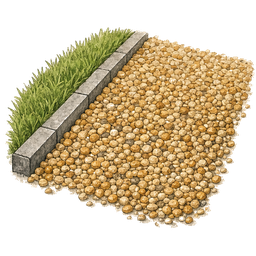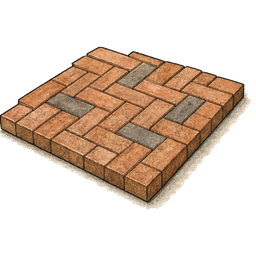
Gravel is cheapest, block is the repairable one, resin is the low-maintenance one, tarmac wins on big areas. Enter your size and see all four costed side by side — then the trade-offs nobody's quote mentions.
Quick answer: For a typical 30m² single drive in 2026: gravel £1,200–£2,200 fitted, tarmac £1,300–£3,200, resin-bound £1,800–£3,600, block paving £2,500–£3,500. Gravel and resin-bound let rain drain straight through, so a properly built drive in either usually avoids the planning rule that catches large solid surfaces. Block paving is the only surface where repairs are invisible. Tarmac gets better value the bigger the drive.
Prices checked July 2026 · how we check them · how we work it out
Rough size is fine — pace it out: one stride ≈ 0.9 m.
No measurements yet? Tap a typical size above for an instant estimate.
Some links are affiliate links — we may earn a commission, at no cost to you.
Ranges blend the 2026 trade guides — the low end assumes straightforward ground and simple spec, the high end premium materials or awkward sites. Concrete sits alongside these at £2,500–£4,000 for a 30m² drive (guides quote it by total, not per m²).
Sense-check it: compare these figures with real quotes from local landscapers — free, no obligation. Already got a quote? We’ll read it against these same price bands — also free.
Prices checked July 2026 · how we check them · how we work it out
These are planning estimates for comparing surfaces, not quotes. Every surface's real price swings on groundwork: what's under your drive now, access, drainage and disposal. When you've picked a surface, its dedicated page below prices the full build properly.
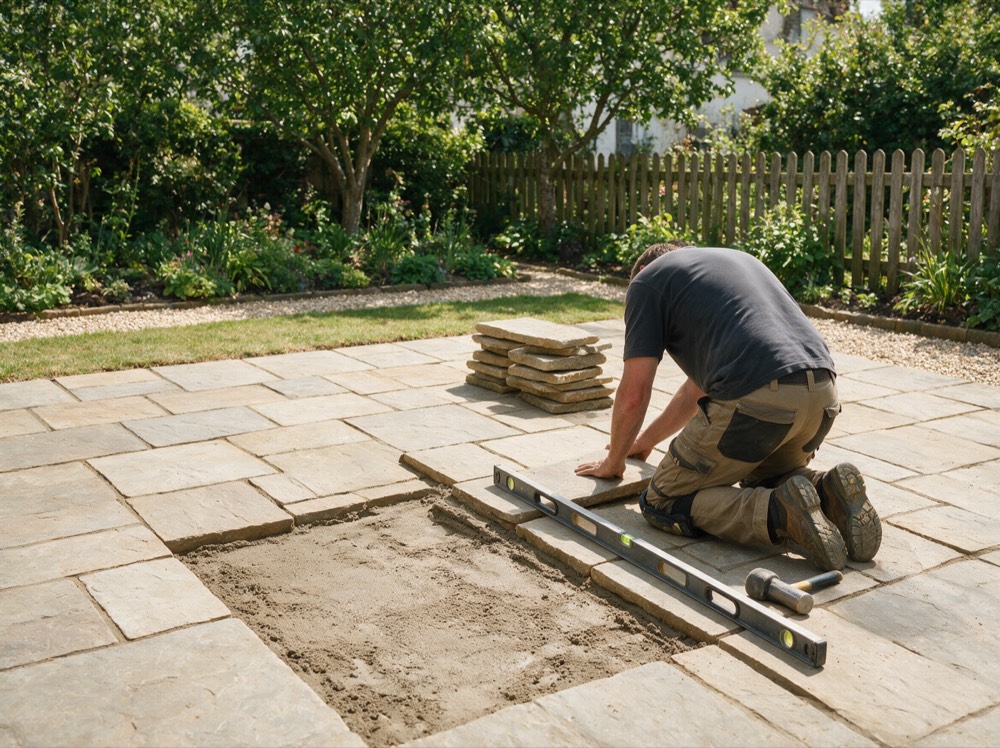
Our figure is researched, but it is not your garden. Post the job free and local landscapers reply with real prices — the honest way to check the estimate above before you commit.
Compare with real quotes →Free to use. If you get quotes through this link we may earn a commission, at no cost to you.
Gravel is loose stones spread over a packed base — the crunchy surface you see on country drives.
Tarmac is the smooth black surface roads are made of, laid hot and rolled flat.
Resin-bound is small stones mixed with a clear glue and spread smooth, so it sets as one solid, speckled surface. Block paving is brick-shaped blocks laid one by one in a pattern.
All four sit on a sub-base (a layer of crushed stone packed down hard underneath) — that hidden layer decides how long your drive lasts more than the surface you pick.
| Gravel | Tarmac | Resin-bound | Block paving | |
|---|---|---|---|---|
| Fitted, per m² | £40–£75 | £45–£100 | £60–£120 | £90–£120 |
| 30m² single drive | £1,200–£2,200 | £1,300–£3,200 | £1,800–£3,600 | £2,500–£3,500 |
| Lifespan | 15+ yrs — you can top up the stones for ever | 20–30 yrs, resealed every ~5 | 15–25 yrs | 20–30 yrs |
| Upkeep | Raking, top-ups, weeding — the most work | Reseal, patch potholes (~£100) — cheap to keep going | Sweep and rinse — the least work | Brush sand into joints, weed joints, wash |
| Repairs | Easy — just add more stone | Cheap, but the patches show | Possible, but patches rarely match | Invisible — single blocks swap out |
| Permeable (lets rain soak through) / planning | Yes — no planning needed, any size | No — the 5m² rule applies | Bound: yes, no planning needed. Bonded (stones scattered on top of glue): no | Standard blocks: no. Special permeable blocks: yes |
Prices checked July 2026, blended from the trade guides. Concrete, the fifth option, prices by total: £2,500–£4,000 for a 30m² drive, 25–50 year lifespan, but cracks can't be repaired invisibly.
1 · What's the budget for a drive of about 30m²? Under £2,200: gravel — nothing else reliably fits that money. £2,000–£3,200: tarmac, or resin-bound if there's already a solid base to lay it on. £2,500–£4,000: block paving and concrete come into play.
2 · Is it on a slope? A clear slope rules out loose gravel. Rain and tyres slowly push the stones downhill, so it wears thin at the top and piles up at the bottom. Stabilisation grids (plastic grids that hold the stones in place, £10–£20/m² extra) fix that if your heart is set on gravel. Tarmac handles slopes well and cheaply. Resin-bound works too, once the installer has checked the gradient.
3 · Is there already a solid concrete or tarmac base under there? If yes, the sums change completely. A resin-bound overlay (laying the new surface straight on top of the old one, £60–£100/m²) skips the digging that makes up most of every other quote. A tarmac resurface at £40–£55/m² is the cheapest refresh of all. But if the old base is cracked or sinking, budget for a full dig-out whatever surface you pick — a new layer over a failing base soon fails the same way, so the money is wasted.
4 · How much upkeep will you honestly do? Happy to rake now and then? Gravel is fine. One jet-wash a year and no more? Resin-bound or tarmac. Don't mind some upkeep, as long as repairs don't show? Block paving is the only surface where a stained or sunken patch can vanish completely — the same blocks come up and go back down.
• Gravel — the tightest budgets, a country look, a quick job (1–2 days), and any size without planning bother. The crunch underfoot even helps put burglars off, though you can't put a number on that. Our gravel driveway planner prices the full build.
• Tarmac — long or large drives, slopes, and anyone counting cost per year. It's the cheapest sealed surface to lay and the cheapest to keep going. The bigger the area, the further its price per m² falls. It looks plain, but it does the job.
• Resin-bound — the smart, seamless look, almost no upkeep, and unbeatable value where a solid base already exists. Our resin driveway guide explains the bound-vs-bonded trap (they sound alike but are very different products) and the corner some installers cut on the resin itself.
• Block paving — the best-looking drive per pound, quality that buyers can see, and the long game: it's the only surface that ages well, because single blocks can be swapped out, and a tired drive can be lifted and laid again on a fresh base using the same blocks. Priced properly in our block paving calculator.
• The mix — a block apron (the strip where the drive meets the road) and block borders around cheaper gravel or tarmac in the middle is often the best value of all: good looks where people look, cheap surface where the tyres sit — and the border doubles as the solid edge that gravel needs to stop it spreading.
Driveways are Trading Standards' textbook doorstep scam. Someone knocks, says they've "noticed a problem", and offers leftover tarmac at a special price, today only. They want cash and a fast yes — then they vanish, or lay 20mm of un-compacted scalpings (loose waste stone that hasn't been packed down, so it soon breaks up). Some gangs even damage what they find to make the job look bigger.
The defence is boring but it works: never buy a driveway at the door, get three written quotes from traders you contacted, and never pay in full up front. And remember — any contract agreed on your doorstep worth over £42 comes with a legal 14-day right to cancel. An honest trader will happily put everything in writing and wait.
Had a suspicious visit? Call the Citizens Advice consumer service: 0808 223 1133.
Gravel, by a distance: £1,200–£2,200 fitted for a 30m² single drive. Compare that with £1,300–£3,200 for tarmac, £1,800–£3,600 for resin-bound and £2,500–£3,500 for block paving. Gravel is also the cheapest to freshen up for ever after — new stone over a solid base costs a fraction of redoing any other surface. The price you pay instead: raking, topping up, and stones ending up in the lawn.
Only sometimes, and this is the England & Wales rule — Scotland and Northern Ireland have their own. A permeable surface (one that lets rain drain straight through — gravel, resin-bound on a draining base, or special permeable blocks) needs no permission at any size, but only if every layer underneath drains too. Lay it over a solid base with nowhere for the water to go and it counts as solid. Solid surfaces (standard block, tarmac, concrete, resin-bonded) over 5m² on a front garden must send their rainwater to a lawn, border or soakaway (a buried pit that lets water soak into the ground) within your own property — otherwise you need planning permission. This is for houses only; flats and conservation areas have different rules. If in doubt, ask your council.
If it's laid properly: concrete lasts 25–50 years, block paving 20–30, tarmac 20–30 with a reseal every ~5 years, resin-bound 15–25, and gravel for ever — you just top up the stones. One honest warning: all those numbers assume the groundwork was done right. The sub-base (the layer of packed stone underneath) decides how long a drive lasts far more than the surface on top does.
Loose gravel is the one to avoid. Rain and tyres slowly push the stones downhill, so it wears thin at the top and piles up at the bottom. Stabilisation grids (plastic grids that hold the stones in place, £10–£20/m² extra) are the fix if your heart is set on it. Tarmac copes well with slopes and is cheap to lay by machine. Resin-bound is often recommended for slopes once the installer has checked how steep it is. Block paving works too, as long as the edges are held firmly in place.
Resin-bound. Sweep it, rinse it now and then, done — nothing can root through the surface itself. Tarmac is next: reseal it every few years and patch any potholes at ~£100 a time. That makes it the cheapest surface to keep in good order. Block paving needs fresh sand brushed into the joints after pressure-washing. Gravel needs the most regular attention of the four: raking, topping up and weeding.
Be wary of the '5–10% value' claims — they come from installers' marketing, not real evidence. What the research does show: a YouGov/HomeOwners Alliance survey found 68% of buyers rate kerb appeal important (kerb appeal means how good the house looks from the street), and a well-kept path or drive matters to 59% — fourth behind windows, roof and a tidy front garden. So a decent drive helps a sale. But putting an exact number on that help would be making it up.
Trading Standards calls driveways the classic doorstep con. Someone knocks, points out a 'problem', offers 'leftover tarmac, today only', and pushes for cash on the spot — then vanishes or does a terrible job. The rules that keep you safe: never buy a driveway at the door, get three written quotes from traders you contacted yourself, and never pay in full up front. And any contract agreed on your doorstep worth over £42 comes with a legal 14-day right to cancel. Report anything suspicious to the Citizens Advice consumer line, 0808 223 1133.
Yes — and it's often the best answer of all. A block-paved apron (the strip where the drive meets the road) and block borders around cheaper gravel or tarmac gives you the good looks where people actually look, and the cheap surface where the car sits. Installers price it as two small jobs, so it works best as part of one bigger quote. And the block border doubles as the solid edge that gravel needs anyway, to stop the stones spreading.
Every price band on this page traces to a source we checked ourselves, with the date we checked it. Prices move — if one of these looks out of date, tell us and we'll recheck it.
We'll carry this over — your driveway and the size you just worked out — and you can add anything else you're thinking about: clearance, paving, decking, fencing, lawn, driveways, planting. You end up with one brief to send to three landscapers, so they all price the same job and you can see which one has quietly left something out.
Doing it yourselves? It sizes your materials list too. Already holding a quote? It gives you the same numbers we'd check it against.