
Home › Research › The garden waste postcode lottery
What we found
- The free allowance covers 1.9% of a patio. The law allows 100 litres per visit. Our own patio coefficient puts a 20m² break-out at about 5,400 litres of rubble. Even using all four permitted visits in four weeks clears 7.4%. (The 100-litre cap is exact; the waste volume is our planning estimate — see limitations.)
- 14 of the 39 English councils we verified (36%) publish a charge for soil or rubble above that allowance. A further 3 confirm a charge but don’t publish the rate — 17 of 39 (44%) charge in some form. Charging above the allowance is lawful; charging within it is not.
- The same bag of rubble costs 2.3× more depending on where you live. Normalised to 100 litres, published rates run from £5.50 (Northumberland) to £12.50 (Oxfordshire). Ealing prices by weight instead: £28.55 per 100kg.
- Seven councils don’t charge because they refuse the excess altogether. Essex, Hertfordshire, Nottinghamshire and Lincolnshire among them. For the homeowner the outcome is the same: pay a skip firm.
- It is an England-only right. Powys charges £2.20 a bag and Newport £1 a bag for household rubble — lawful in Wales, unlawful in England. Scotland tends to use vehicle bans rather than charges.
Why the cap is so small
This is the part that explains everything else. The government’s own consultation opened at 300 litres a week — described as roughly the size of a family car. The final rule landed at under 100 litres per visit, cut explicitly “to minimise the risk of abuse by traders”.
That is a defensible thing to worry about. But the effect is that the allowance was sized to stop a builder filling a van, and a homeowner digging out a border is caught by the same limit. Above it, soil and hardcore are legally construction and demolition waste — industrial waste, chargeable exactly as it was before the reform.
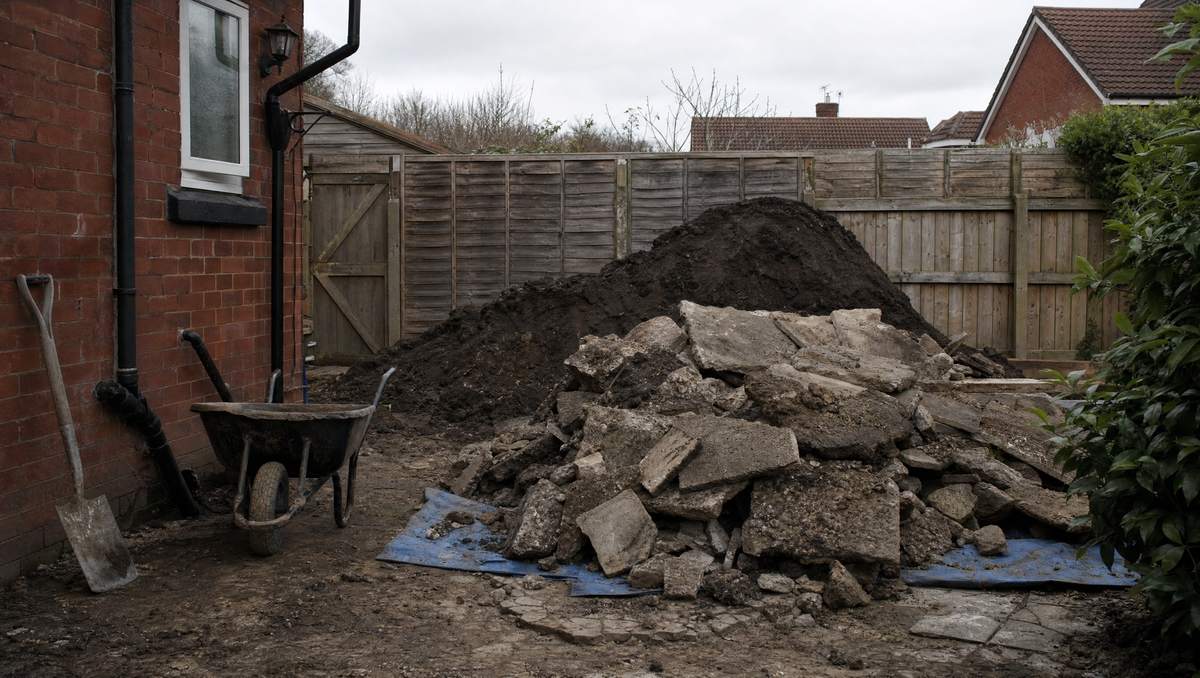
What it actually costs to clear a real job
Because the free route tops out at two bags, every real garden project ends up in the commercial market. A grab lorry runs about £340 a load; mini-skips about £85 each, and soil is too heavy for the big 8-yard skips. Our garden clearance calculator prices this for your own garden.
The data: what every council we checked charges
England only — the free-DIY rule is England-specific. Charges shown are for soil, rubble and hardcore above the free allowance. Checked 22–24 July 2026.
| Council | Soil & rubble above the allowance | Access controls | Source |
|---|---|---|---|
| Barnet | Free within cap | Booking | source |
| Birmingham City Council | Free within cap | Van ban, Permit, Booking | source |
| Bournemouth, Christchurch and Poole | £2.80 / bag | Permit, Booking | source |
| Brighton & Hove City Council | Turns excess away | Permit | source |
| Bristol City Council | £3 / bag | Permit, Booking, Visit cap | source |
| Bromley | £4 / 50L bag | Permit, Booking, Visit cap | source |
| Cheshire East Council | Free within cap | Permit, Visit cap | source |
| City of Bradford MDC | £10.50 / load | Permit, Visit cap | source |
| Coventry City Council | Not stated | Permit, Booking | source |
| Derbyshire County Council | Free within cap | Van ban, Permit, Visit cap | source |
| Dudley Metropolitan Borough Council | Turns excess away | Permit, Booking, Visit cap | source |
| Durham County Council | Free within cap | Permit | source |
| Ealing | £28.55 / 100kg | Booking | source |
| Essex County Council | Turns excess away | Permit, Booking | source |
| Gateshead Council | Turns excess away | Van ban, Permit, Booking | source |
| Gloucestershire County Council | Free within cap | Permit, Booking | source |
| Hampshire County Council | £3 / 50L sack | Permit, Visit cap | source |
| Hertfordshire County Council | Free within cap | Permit, Visit cap | source |
| Kirklees Council | Free within cap | Permit, Booking | source |
| Lancashire County Council | Free within cap | Permit, Booking | — |
| Leeds City Council | Charges, rate not published | Permit, Visit cap | source |
| Lincolnshire County Council | Free within cap | Permit, Booking | source |
| Newcastle City Council | Turns excess away | Permit | source |
| Norfolk County Council | Charged above 2 sacks | Permit, Booking | source |
| North Yorkshire Council | £3.80 / bag | Permit, Booking, Visit cap | source |
| Northumberland County Council | £2.75 / bag | Permit, Booking | source |
| Nottinghamshire County Council | Turns excess away | Permit, Visit cap | source |
| Oxfordshire County Council | £2.50 / 20L bag | Permit, Booking, Visit cap | source |
| Recycle for Greater Manchester | Free within cap | Permit | — |
| Sheffield City Council | Not stated | Van ban, Permit, Booking | source |
| Somerset Council | £5.70 / rubble sack | Van ban, Booking, Visit cap | source |
| Staffordshire County Council | £4 / bag after two | Permit | source |
| Stockton-on-Tees Borough Council | Not stated | Permit, Booking, Visit cap | source |
| Suffolk County Council | £2.06 / 25L bag | Permit, Booking, Visit cap | source |
| Surrey County Council | £4 / bag | Permit, Visit cap | source |
| Wakefield Council | Free within cap | Permit, Visit cap | source |
| Wandsworth | Charges, rate not published | Van ban, Booking | source |
| West Northamptonshire Council | Charges, rate not published | Permit, Booking | source |
| West Sussex County Council | Turns excess away | Permit, Booking | source |
Wales, Scotland and Northern Ireland
| Council | Nation | Soil & rubble | Source |
|---|---|---|---|
| Armagh City, Banbridge and Craigavon Borough Council | Northern Ireland | Not stated | source |
| Belfast City Council | Northern Ireland | Turns excess away | source |
| Derry City and Strabane District Council | Northern Ireland | Free within cap | source |
| Lisburn and Castlereagh City Council | Northern Ireland | Not stated | source |
| Newry, Mourne and Down District Council | Northern Ireland | Not stated | source |
| Aberdeenshire Council | Scotland | Free within cap | source |
| Dundee City Council | Scotland | Free within cap | source |
| South Lanarkshire Council | Scotland | Turns excess away | source |
| The Highland Council | Scotland | Turns excess away | source |
| Cardiff Council | Wales | Free within cap | source |
| Carmarthenshire County Council | Wales | Free within cap | source |
| Newport City Council | Wales | Not stated | source |
| Powys County Council | Wales | Free within cap | source |
| Rhondda Cynon Taf County Borough Council | Wales | Free within cap | source |
| Swansea Council | Wales | Not stated | source |
So what do you actually do about it?
The free allowance is not useless — it is just useless as a plan for a whole project. Four things genuinely cut the bill, and none of them involve buying anything.
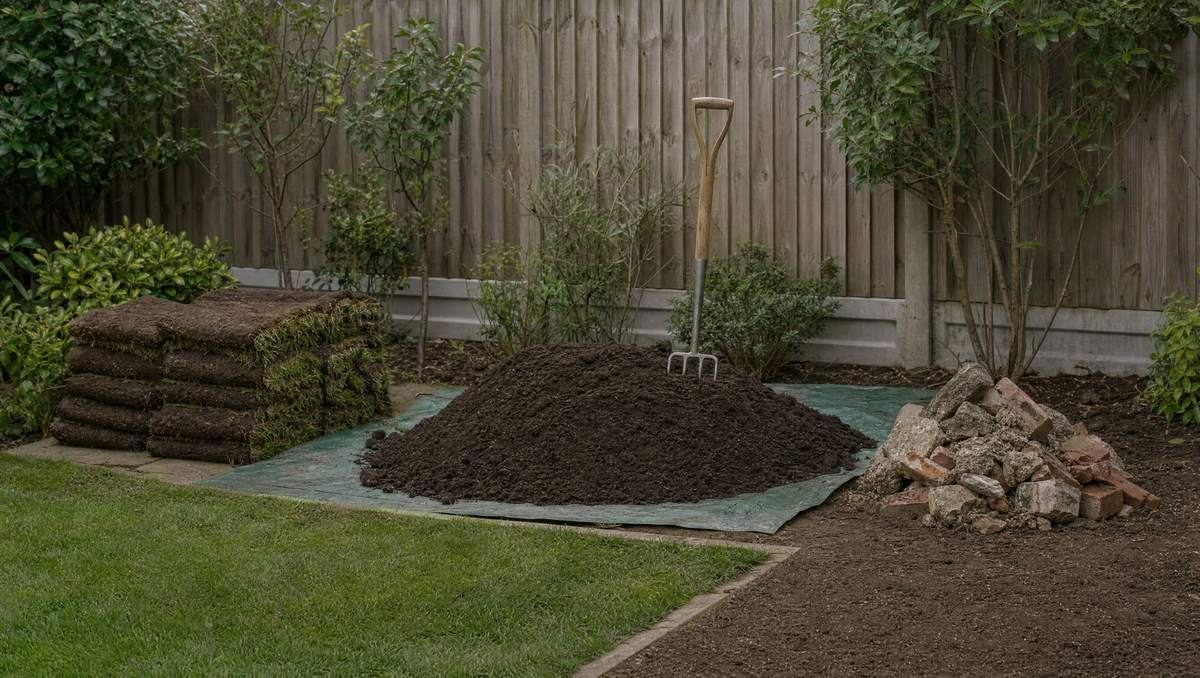
1. The allowance is per visit, not per project
100 litres per visit, up to four visits in any four weeks — so 400 litres free a month if you plan the trips. That will never clear a patio, but it will comfortably clear a border dig or a season of prunings and turf offcuts. Book the slots in advance; most councils now require it.
2. Don’t put clean soil in a skip at all
This is the biggest single saving on this page and it costs nothing. Clean topsoil and lifted turf are the one kind of garden “waste” with real demand — a “free topsoil, you collect” listing on Facebook Marketplace, Gumtree or a local Freecycle group typically goes within days, especially in spring. Allotment sites and neighbours building raised beds will often take it by the barrow-load. Skip space is priced by weight, and soil is the heaviest thing you will put in one.
3. Sort it before it leaves the garden
Mixed loads get charged as general DIY or inert waste. Clean, separated soil, rubble and green waste are frequently cheaper, and green waste is usually free. Three cheap builder’s bags and an hour of sorting can move a chunk of the job from the chargeable pile to the free one.
4. For heavy spoil, price a grab lorry against skips
Soil and hardcore are dense, so a skip hits its weight limit long before it looks full — which is why big skips are often refused for soil. A grab lorry takes roughly a whole skip-lorry’s worth in one go and is usually cheaper per tonne than hiring three or four mini-skips. Get both quotes; the gap is often a few hundred pounds.
And if you hire a “man and van”: check they are a registered waste carrier (free to search on the Environment Agency register). If your waste is fly-tipped, the duty of care is yours — the fine follows the person whose garden it came from, not the man with the van.
How does your council compare?
The table above is the whole verified sample. If yours is in it, you can see whether you are in a charging area, what the rate is, and whether you need a permit before you turn up. If it isn’t, the same three questions get you there in one phone call: is there a charge above the free allowance, do I need a van or trailer permit, and do I have to book?
How we did this
We sampled 54 UK waste authorities, stratified across all nine English regions and all four nations, prioritising larger populations. For each we read the council’s own fees page — never a third-party tip-finder or a listicle — and recorded the charge, the free-allowance limits, any van or permit restriction, and the date shown on the page.
Every row was then independently re-checked against the live council page by a second pass that could mark it failed. Rows that failed verification are excluded from every number above, including one council whose widely-quoted per-bag figure does not appear on its own page. The counts here use only the 39 verified English rows.
The legal framework comes from SI 2023/1243 and the government’s consultation response.
Where this could be wrong
- It is a sample, not a census. 54 of roughly 185 UK waste authorities. “36% of the councils we checked” is not “36% of England”, and we don’t extrapolate it.
- Soil is not banned from the free allowance. A common misreading. Soil and rubble qualify free up to the cap; they become chargeable only above it.
- Project waste volumes are our estimates, built from layer depths and published bulking factors. Real volumes swing with dig depth and design. The 100-litre cap they are measured against is exact.
- Some councils block automated checking. A handful of figures were confirmed via cached text rather than a live fetch and are flagged in our working; treat any single council’s exact fee as worth a phone call before you rely on it.
- Fees change, usually each April. Everything here is a July 2026 snapshot.